Program
Session 1 (10:20 - 11:50)
Each paper has 20 minutes for presentation + 10 minutes of Q/A
- Welcome to the 7th Edition of the Sem4Tra Workshop.
- Keynote talk: Interoperable Europe Portal: The hub for interoperability. Sander Van Dooren, Interoperability Architect at EU DG DIGIT (10:20 — 10:50)
- A methodological framework for managing and updating controlled vocabularies in mobilityDCAT-AP. Julien Martineau, Mario Scrocca, Peter Lubrich, Petr Bureš and Jasper Beernaerts (10:50 — 11:20)
- Lowering the Barrier: An Architecture for Creating, Maintaining and Executing Mappings. Pim Mulder, Wouter van den Berg, Jan Pieter Wijbenga and Cornelis Bouter (11:20 — 11:50)
11:50 - 12:40: lunch break
Session 2 (12:40 - 14:10)
- Building and Publishing a Railway Infrastructure Knowledge Graph: Lessons Learned from SPARQL Anything, GeoSPARQL, SHACL and RINF Publication. Mathias Vanden Auweele, Linnea Catharina Olsen, Mia Pin Berge and Johan Korsmo (12:40 — 13:10)
- VPA: An Ontology for Verified Permissions and Authorisations Maarten Duhoux, Ghislain Auguste Atemezing (13:10 — 13:40)
- It is Not the Standard, It is the Feed: Analysis of a Minimum Viable Denominator for Comparing GTFS and NeTEx in European Public Transport Data. Livia Mihaela Miclaus, Shahrom Sohi (13:40 — 14:10)
Important dates
17
July, 2026
Paper Submission
Deadline extended!Submit your paper through EasyChair.
30
July, 2026
Notifications
The notification and reviews from our Program Committee will be available.
4
September, 2026
Submission camera ready
Time to have your paper ready for being published. All the accepted paper will be published in the proceedings.
15
September, 2026
Event
Keynote, papers presentations, demo jam and a lot of discussion. Remember! If your contribution is accepted, it needs to be presented by one of the authors at the event.
Organizers
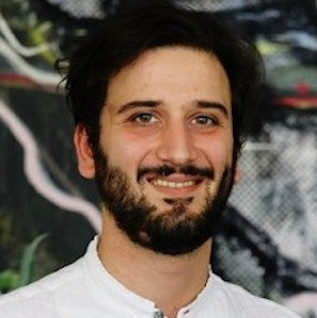
Shahrom Sohi
Researcher, WU Vienna
Ghislain Atemezing
Operational Data Unit, European Railways Agency
Cornelis Bouter
Sciencetist Innovator, TNO
Julián Rojas
Postdoctoral Researcher, imec - IDLab UGentProgram Committee
- Dragomir Balan, Happtiq
- David Prenninger, Xatellite mobility
- Catherine Roussey, INRAE
- Fidel Santiago, European Commission (DG MOVE)
- Philippe Michiels - IMEC
Previous Editions
| Year | Location | Proceedings | Website |
|---|---|---|---|
| 2019 | SEMANTiCS - Karlsruhe | http://ceur-ws.org/Vol-2447/ | https://semantic-transportation.github.io/sem4tra-kg-website/2019 |
| 2020 | ICWE - Online | https://link.springer.com/book/10.1007/978-3-030-65665-2 | https://semantic-transportation.github.io/sem4tra-kg-website/2020 |
| 2021 | SEMANTiCS - Amsterdam & Online | http://ceur-ws.org/Vol-2939/ | https://semantic-transportation.github.io/sem4tra-kg-website/2021 |
| 2022 | SEMANTiCS - Vienna & Online | http://ceur-ws.org/Vol-3235/ | https://semantic-transportation.github.io/sem4tra-kg-website/2022 |
| 2023 | SEMANTiCS - Leipzig & Online | https://ceur-ws.org/Vol-3510/ | https://semantic-transportation.github.io/sem4tra-kg-website/2023 |
| 2025 | SEMANTiCS - Vienna | https://ceur-ws.org/Vol-4064/ | https://semantic-transportation.github.io/sem4tra-kg-website/2025 |